Florist Delivery
How to Transport Flowers in a Car Without Wilting or Crushing Them
How to transport flowers in a car: keeping stems in water, securing bouquets and vase arrangements, protecting them from heat and cold, and moving wedding flowers to a venue.
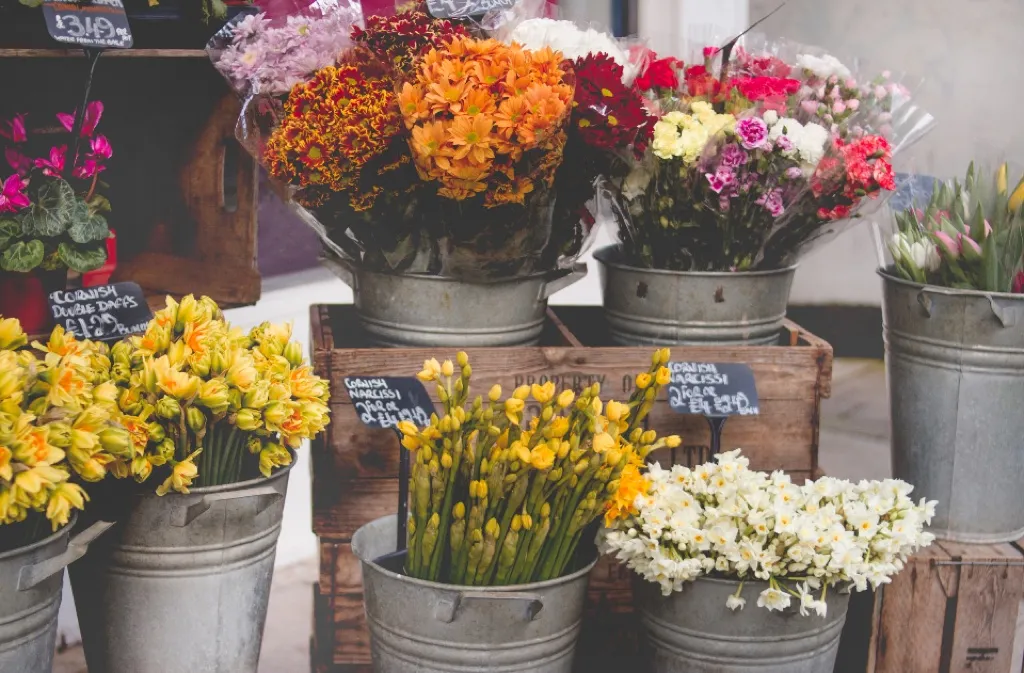
The best way to transport flowers in a car is to keep the stems in water, keep the flowers upright and braced so they can’t tip, and keep the car cool and out of direct sun. Make the trip short, and never leave flowers in a parked car.
Cut flowers are more fragile than they look. They bruise when they’re squeezed, snap when they slide, and wilt quickly in heat. A little setup before you leave protects all of that.
Key takeaways
- Water, upright, cool. Those three things prevent most damage in transit.
- Most cut flowers are stored at 33 to 35°F by florists. A warm car is the opposite of what they want.
- A parked car can heat up 20 degrees in as little as 10 minutes, so flowers should never wait in one.
- Brace every container so nothing tips or slides during braking and turns.
- Re-cut the stems and get the flowers into fresh water as soon as you arrive.
Why Flowers Wilt in Transit
Flowers wilt in transit for three reasons: they lose water, they get too warm, or they’re exposed to ethylene gas.
Water loss. A cut stem can only take up water while it’s sitting in it. Out of water, the flower keeps losing moisture through its petals and leaves with nothing coming in.
Heat. Researchers at the University of Florida and UC Davis, writing for the American Floral Endowment, advise that all but tropical flowers should be stored between 33 and 35°F, and that high temperatures decrease vase life and reduce quality (American Floral Endowment research report). You won’t hit florist-cooler temperatures in a car, but the direction is clear: cooler is better.
Ethylene. Ethylene is a colorless, odorless gas that causes wilted petals, dropped buds, and yellowing leaves. The same report lists its common sources as dead and decaying flowers, vehicle exhaust, and ripening fruit. That makes the grocery run a risk: a bouquet riding next to a bag of bananas or apples is sitting in ethylene.
Before You Leave: Prepare the Flowers
A few minutes of preparation makes the drive much less risky.
- Give them a long drink first. Let the flowers sit in fresh water in a cool spot before the trip so they start fully hydrated.
- Keep the stems wet. Transport loose stems and hand-tied bouquets in a bucket or sturdy vase with a few inches of water. For a wrapped bouquet on a short trip, wrap the stem ends in a soaked paper towel and cover that with a plastic bag secured by a rubber band.
- Protect the blooms. A loose paper or cellophane sleeve keeps flower heads from rubbing against each other and against the car.
- Lower the water level for vases. A vase arrangement doesn’t need to be full for a short drive. Less water means less to slosh and spill.
- Cool the car before loading. Run the air conditioning for a few minutes so the flowers aren’t going into a hot cabin.
How to Secure Flowers in a Car
Most damage happens when a container tips or slides. The fix is to brace everything so it can’t move.
Bouquets in buckets. Put the bucket on the floor behind the front seat or in the passenger footwell, where the seat and the door hold it in place. Wedge rolled towels around the base. A bucket standing free in a cargo area will tip on the first turn.
Vase arrangements. Set the vase inside a cardboard box that’s slightly bigger than its base, then pack the gaps with crumpled paper or towels. The box gives the vase a wide, flat footprint. Place it on the floor, not on a seat.
Several arrangements at once. Use divided boxes or crates so each container has its own cell. Don’t let arrangements lean on each other, because flower heads bruise where they touch.
Tall arrangements. Measure the height against the vehicle before loading. Flowers that brush the roof get crushed on every bump. An SUV or van with a flat floor is better than a sedan for anything tall.
Flat boxes. Boutonnieres, corsages, and loose stems travel well lying in shallow boxes lined with tissue. Keep the boxes level and don’t stack anything on top.
Wherever the flowers ride, keep them away from loose items that could slide into them, and off any seat that slopes backward.
Keep Flowers Cool, and Out of the Trunk in Summer
Temperature control is the part people skip.
- Run the air conditioning and keep flowers out of direct sunlight coming through the windows.
- Avoid a hot trunk. A closed trunk has no airflow and heats up fast. Use it only in mild weather.
- Never leave flowers in a parked car. The National Highway Traffic Safety Administration warns that a vehicle’s interior temperature can rise 20 degrees in as little as 10 minutes (NHTSA). A quick stop on a Nashville summer afternoon is enough to cook a bouquet.
- Keep fruit out of the car. Ripening fruit gives off ethylene, so don’t carry flowers and produce together.
- Make flowers the last pickup and the first drop-off if you have several errands.
Cold is a risk too. University of Illinois Extension horticulture educator James Schuster notes that the paper wrapping used to protect flowers in winter “is only a short-term protection,” and advises thinking about how cold the car is and how long the trip will take (University of Illinois Extension). On a freezing day, warm the car first and make sure the sleeve folds over the top of the blooms.
How to Transport Wedding and Event Flowers
Wedding flowers raise the stakes: there are more pieces, they have to look perfect, and there’s a fixed time they must be in place.
- Move pieces by type. Bouquets go in water in individual vases or a divided crate. Centerpieces go in boxes. Boutonnieres and corsages go in flat, labeled boxes.
- Assemble large pieces on-site. Arches, hanging installations, and tall centerpieces travel better as components. Bring them to the venue and build them there.
- Label everything. Mark each box with where it goes: ceremony, head table, cocktail hour. It saves time during setup.
- Confirm venue access ahead of time. Ask where to unload, when the room opens for setup, and whether there are stairs or a service elevator.
- Bring a repair kit. Extra stems, floral tape, wire, snips, a spray bottle, and towels fix most small problems.
- Take photos when the setup is finished. They confirm everything was delivered and placed as planned.
Nashville venues vary a lot, from hotels near Downtown to barns and estates around Franklin. Load-in rules and distances differ at each one, so a call to the venue coordinator earlier in the week is worth the time. The same planning applies to cakes, which we cover in how to transport a cake.
What to Do When the Flowers Arrive
Flowers recover from a drive if you help them right away.
- Re-cut the stems. Schuster recommends cutting about one to two inches off the stems under water and, if possible, putting the flowers into a vase while still under water, which prevents air bubbles from interfering with water uptake.
- Use clean water and flower food. Change the water frequently, at least once a day.
- Remove damaged petals and leaves. Decaying plant material is another source of ethylene.
- Place them somewhere cool, away from direct sun, heating vents, and the fruit bowl.
When to Use a Flower Delivery Service
Florists who deliver their own orders lose design time to driving, especially around holidays and wedding season. A delivery service makes sense when:
- Orders peak. Valentine’s Day, Mother’s Day, and wedding weekends can mean dozens of drops in a day.
- Stops are spread out. A route that runs from East Nashville to Green Hills to Franklin is hours of driving.
- Arrangements are large. Event pieces need a vehicle with a flat floor and room to stand upright.
- You want proof of delivery. A photo at the door settles “it never arrived” questions and shows the arrangement’s condition. Read more about proof of delivery.
Look for a courier who keeps the vehicle cool, carries arrangements upright, and delivers within a set window. You can learn how we handle flower delivery for Nashville florists.
Frequently Asked Questions
How long can flowers stay in a car?
As short a time as possible. In a cool, air-conditioned car with the stems in water, flowers handle a normal drive well. In a parked car they can overheat within minutes on a warm day, so don’t leave them.
Can you transport flowers without water?
For a short trip, yes, if the stem ends are wrapped in a wet paper towel and a plastic bag. For anything longer, or in warm weather, carry them in a bucket or vase with a few inches of water.
How do you transport a vase of flowers without spilling?
Pour out some of the water, set the vase in a snug box, pack towels or paper around it, and put the box on the floor of the car. Top the water up when you arrive.
Is it better to put flowers in the trunk or the back seat?
In the cabin, on the floor. It’s air-conditioned and you can brace the container against the seat. A closed trunk has no airflow and can get hot, so use it only in mild weather.
How do you keep flowers fresh on a long car ride?
Keep the stems in water, run the air conditioning, shade the flowers from direct sun, and keep fruit out of the car. Re-cut the stems and put them in fresh water when you arrive.
The Bottom Line
Flowers travel well when they’re in water, upright, braced, and cool. Keep the trip short, don’t leave them in a parked car, and re-cut the stems when you get there. For large or time-critical orders, plan the venue access in advance and take a photo when everything is in place. To see what a flower delivery would cost across Nashville, use the delivery cost calculator.