Catering Delivery
How to Keep Food Hot While Transporting It: A Guide for Catering and Events
How to keep food hot while transporting it: the safe temperature to hold, how to pack pans and carriers, where to put food in the vehicle, and what to check when you arrive.
To keep food hot while transporting it, start with food that’s fully heated, pack it tightly into preheated insulated carriers, keep the lids shut, and get it to the table quickly. The goal is to keep the food at 140°F or above from the moment it leaves the kitchen until it’s served.
That number comes from food safety guidance, but it’s also about quality. Food that arrives at 150°F tastes like it just left the kitchen. Food that arrives at 110°F is both a safety problem and a disappointed client.
Key takeaways
- Keep hot food at 140°F or above. Bacteria grow fastest between 40°F and 140°F, the “Danger Zone.”
- Insulation holds heat; it doesn’t add it. Food has to go into the carrier hot.
- Full, preheated, sealed carriers stay hot far longer than half-empty ones opened along the way.
- Perishable food shouldn’t sit out more than 2 hours, or 1 hour above 90°F.
- Check the temperature on arrival with a food thermometer, and reheat to 165°F if it has dropped.
What Temperature Should Hot Food Stay At?
Hot food should stay at 140°F or higher. The USDA Food Safety and Inspection Service calls the range between 40°F and 140°F the Danger Zone, because bacteria multiply quickly at those temperatures.
There are two versions of the number, and both are worth knowing:
- 140°F is the USDA’s guidance for holding hot food, and the easier one to remember.
- 135°F is the minimum hot-holding temperature in the FDA Food Code, the model that state and local health departments base their rules on for restaurants and caterers.
If you aim for 140°F or higher, you’re covered under either one.
The same USDA guidance sets the time limit: never leave perishable food out of temperature control for more than 2 hours, or more than 1 hour when the air temperature is above 90°F. On a July afternoon in Nashville, at an outdoor reception or a tailgate, the 1-hour rule is the one that applies.
Start Hot: Insulation Only Holds Heat
The most common mistake is expecting the carrier to do the cooking. An insulated bag or box slows heat loss. It can’t raise the temperature of food that went in lukewarm.
Before anything is packed:
- Cook or reheat food to its proper temperature, and take it well above 140°F so there’s a margin for the trip.
- Pack at the last possible moment. Every minute in the carrier before departure is a minute of heat lost.
- Take a temperature reading and note it. A probe thermometer in the thickest part of the dish tells you where you’re starting from.
How to Pack Hot Food for Transport
How the food is packed matters as much as what it’s packed in.
- Preheat the carrier. Fill an insulated box or cooler with hot water for several minutes, then empty and dry it before loading. A cold carrier pulls heat out of the first pans that go in.
- Fill pans and fill the carrier. A full pan holds heat better than a half-full one, and a full carrier holds heat better than one with empty space. If there are gaps, fill them with clean towels.
- Cover tightly. Use fitted lids or wrap pans in foil. Steam that escapes takes heat with it.
- Wrap and insulate. University of Nebraska-Lincoln Extension recommends keeping hot foods hot (140°F or higher) “by wrapping them in foil, and then in heavy towels,” or carrying them in insulated wrappers or containers designed to keep food hot (UNL Food).
- Keep hot and cold apart. Hot pans and cold salads in the same carrier ruin both. Use separate containers.
- Don’t open it to check. Each time the lid opens, heat leaves. Check at departure and again at arrival.
The Best Containers for Keeping Food Hot
You can move hot food well with basic equipment or professional gear. From simplest to most capable:
| Container | Best for | What to know |
|---|---|---|
| Foil and towels | A dish or two, short trips | Works for casseroles and wrapped trays; limited hold time |
| Insulated bags | Boxed meals, pizzas, small trays | Light and cheap; best when packed full |
| A cooler used as a hot box | Home cooks and small caterers | Preheat with hot water, line with towels, pack pans tightly |
| Insulated food pan carriers | Full-size hotel pans, catering volumes | Purpose-built, stackable, with gasketed doors |
| Insulated beverage dispensers | Soup, coffee, gravy, sauces | Preheat with hot water before filling |
| Heated holding cabinets | Long holds, large events | Plug in at the venue or in a vehicle with power |
A standard cooler works as a hot box because insulation works both ways. It keeps heat in just as well as it keeps heat out. Just don’t use the same cooler for hot and cold on the same trip.
Where to Put Hot Food in the Vehicle
The vehicle is part of the packing plan.
- Load hot food last so it spends the least time waiting, and unload it first.
- Keep carriers flat and wedged in. A pan that slides spills, and a carrier that tips can pop its lid. Use non-slip mats and fill gaps between carriers.
- Mind the cabin temperature. In winter, a warm cabin helps. In summer, air conditioning aimed at an uninsulated tray cools it quickly, so keep hot food in closed carriers and away from vents.
- Go straight there. Plan the route and the unloading point ahead of time. Detours and searching for the right entrance are where food cools.
Nashville adds its own timing risks. Interstate traffic can stretch a 20-minute run past the half-hour mark, and event load-ins at downtown hotels or venues often mean a wait for the dock or a service elevator. Build that time into the plan, and pack as though the trip will take twice as long as the map says.
When You Arrive: Check, Hold, or Reheat
Getting to the venue isn’t the finish line. What happens in the first ten minutes there decides whether the food is served hot.
- Take the temperature. Use a food thermometer in the center of each dish. You’re looking for 140°F or higher.
- Move food into hot holding right away. Chafing dishes, warming trays, slow cookers, or an oven all work. UNL Extension advises placing hot foods in an oven hot enough to keep them at an internal temperature of 140°F or above.
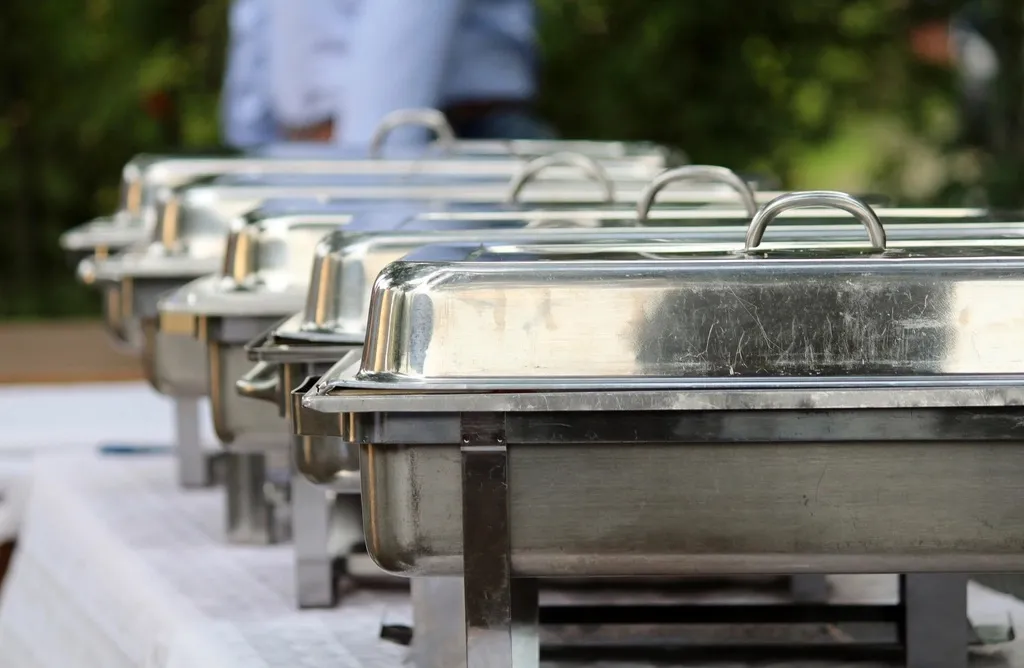
- Preheat the holding equipment. Chafing dishes should have hot water in the pan and fuel lit before the food arrives. They’re built to keep food hot, not to heat it up.
- Reheat if it’s dropped. Food that has fallen below 140°F should be reheated to 165°F before serving, as long as it’s been in the Danger Zone for less than 2 hours.
- Discard what’s been out too long. UNL Extension is direct about this: perishable foods kept at room temperature for longer than 2 hours should be thrown out.
A quick photo of the setup with the thermometer reading is useful for caterers. It’s a record that the food arrived hot and on time, which is the same idea behind proof of delivery.
When to Use a Delivery Service for Hot Food
Caterers and restaurants often handle their own deliveries until the day two orders are due at the same time on opposite sides of town. A delivery service makes sense when:
- You have more orders than drivers during the lunch rush or on a busy weekend.
- The drop-off is far from your kitchen, such as a run from East Nashville to a venue in Franklin.
- You need a larger vehicle for stacked carriers and equipment.
- You want a set delivery window and photo confirmation to share with your client.
When you hand hot food to a courier, pack it in closed insulated carriers, label what’s hot and what’s cold, and state the delivery deadline and serving time. You can read more about how we handle catering delivery in Nashville, or see how recurring orders work for meal prep businesses.
Frequently Asked Questions
How long will food stay hot in a cooler?
It depends on the cooler, how full it is, how hot the food was going in, and how often it’s opened. A preheated, tightly packed cooler lined with towels holds heat much longer than a half-empty one. Don’t rely on a time estimate. Check with a thermometer when you arrive.
How do you keep food hot for hours without electricity?
Use a preheated insulated carrier packed full, with pans wrapped in foil and towels. At the venue, chafing dishes with canned fuel will hold food at serving temperature without a power outlet.
What temperature should hot food be kept at during transport?
At 140°F or above, according to USDA guidance. Food establishments following the FDA Food Code must hold hot food at a minimum of 135°F.
Can you reheat food that got cold during delivery?
Yes, if it has been below 140°F for less than 2 hours. Reheat it to 165°F before serving. If it’s been in the Danger Zone longer than 2 hours, or 1 hour in temperatures above 90°F, throw it out.
How do caterers keep food hot during transport?
They start with food well above 140°F, pack full pans into preheated insulated carriers, keep the carriers closed for the whole trip, and transfer the food straight into preheated chafing dishes or warmers at the venue.
The Bottom Line
Keeping food hot in transit comes down to five things: start hot, preheat the carrier, pack it full, keep it shut, and check the temperature when you get there. Aim for 140°F or higher the whole way and plan for the trip to take longer than expected. If you’re also moving desserts, see our guide on how to transport a cake, or price a catering delivery across Nashville.