Delivery Basics
What Is Last-Mile Delivery? A Guide for Local Businesses
Last-mile delivery explained: what it means, why it's the most expensive part of shipping, the common problems, and how local businesses in Nashville can handle it better.
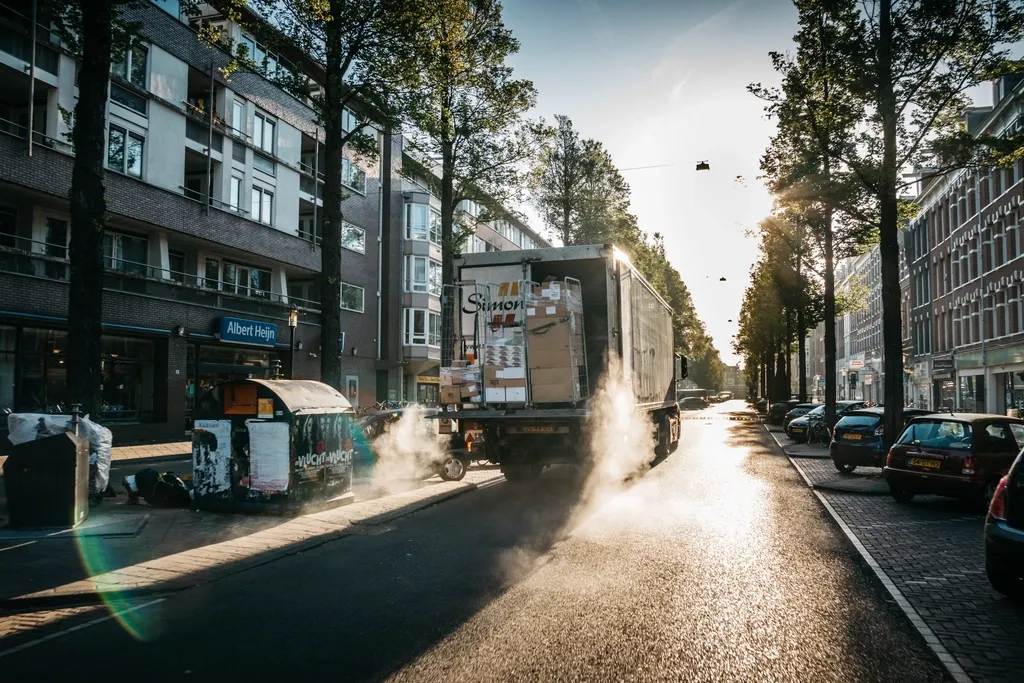
Last-mile delivery is the final leg of a delivery: the trip from the last stop in the supply chain, such as a warehouse, store, or kitchen, to the customer’s door. It’s the part of the journey the customer actually sees, and it’s usually the most expensive and least predictable part to run.
For a large retailer, the last mile starts at a local distribution center. For a Nashville bakery, caterer, or florist, the last mile is often the entire delivery: from your kitchen or shop in East Nashville to an office in SoBro, a venue on Music Row, or a home in Franklin.
Key takeaways
- Last-mile delivery is the final leg from a local hub or business to the recipient.
- It’s the costliest leg: Capgemini Research Institute estimated it at 41% of total supply chain costs for retail parcels.
- Costs come from many small stops, failed attempts, traffic, and tight time windows.
- Local businesses control it best with batched routes, clear time windows, live tracking, and proof of delivery.
What Does Last-Mile Delivery Mean?
Logistics teams usually split a shipment’s journey into three stages:
| Stage | What happens | Example |
|---|---|---|
| First mile | Goods move from the producer to the first warehouse or hub | A roaster ships bags of coffee to a distributor |
| Middle mile | Goods move between warehouses, hubs, or stores in bulk | The distributor sends pallets to a Nashville warehouse |
| Last mile | Goods move from the final hub to the recipient | A van delivers cases to cafés around the city |
The first and middle miles move goods in bulk, on predictable routes. The last mile breaks those loads apart into individual deliveries, each with its own address, time window, and recipient. That’s where cost and complexity climb.
Why Is Last-Mile Delivery So Expensive?
The last mile is expensive because every delivery is a separate stop with its own time, distance, and chance of something going wrong. A 2019 study by the Capgemini Research Institute found that last-mile delivery accounts for 41% of overall supply chain costs for retail parcels, more than any other leg.
Several factors drive that cost:
- Low drop density. A middle-mile truck delivers one full load to one dock. A last-mile vehicle may make a dozen stops, each with parking, walking, and hand-off time.
- Failed deliveries. If no one is there to receive an order, the driver has to return, re-attempt, or reroute, paying twice for the same delivery.
- Traffic and access. Congested corridors, road closures, and limited loading space add minutes to every stop.
- Tight time windows. A lunch delivery that must land between 11:30 and 11:45 leaves less room to combine it with other stops.
- Special handling. Cakes, flowers, and hot food can’t simply be tossed in a van with other boxes.
The pressure is growing. The World Economic Forum projected in 2020 that demand for delivery would put 36% more delivery vehicles on the streets of the world’s top 100 cities by 2030, adding to congestion and emissions without changes in how deliveries are planned.
Common Last-Mile Delivery Challenges
For local businesses, the biggest last-mile problems are usually practical ones:
- Unpredictable arrival times. Customers want to know when an order will show up, not just that it’s “out for delivery.”
- No visibility once the order leaves. Without tracking, every “where’s my order?” call becomes a phone chase.
- Disputed deliveries. Without photos or signatures, it’s hard to show when and where an order was left.
- Driver availability. In-house drivers are either idle or overbooked, and gig apps may send a different stranger every time.
- Fragile or temperature-sensitive goods. Food, florals, and baked goods need careful loading and short time in transit.
- Event-day congestion. In Nashville, large downtown events, game days, and festival weekends can close streets and slow crosstown routes.
How to Improve Last-Mile Delivery
You don’t need a logistics department to run a better last mile. These steps make the biggest difference:
- Batch nearby stops. Group deliveries by area and time window so one vehicle serves several recipients in a single route. Multi-stop routes spread the cost of the trip across more orders.
- Set realistic time windows. Agree on a delivery window with each recipient, and plan routes around the tightest ones first.
- Share live tracking. A tracking link sent by text or email cuts down on calls and makes sure someone is ready to receive the order.
- Capture proof of delivery. Photos, signatures, and delivery notes settle questions quickly and protect you in disputes.
- Match the vehicle to the load. An SUV is enough for a few trays; a cargo van makes sense for wholesale cases. Don’t pay for space you don’t need.
- Work with couriers who know your routine. Couriers who have delivered for you before already know your pickup process and your regular recipients, which means fewer mistakes.
- Plan around the calendar. Check for big downtown events and schedule early pickups on days when crosstown traffic will be heavy.
Last-Mile Delivery Options for Local Businesses
Most small and mid-sized businesses choose between three approaches:
| Option | Pros | Cons |
|---|---|---|
| In-house drivers | Full control, drivers know your products | Payroll, vehicles, and insurance even when volume is low |
| Consumer delivery apps | Easy to start, wide coverage | Built for restaurant takeout; limited control over who shows up or how items are handled |
| Local courier service | Pay per delivery, choice of vehicle, tracking and proof of delivery | Less control than your own staff |
Many businesses mix them: in-house staff for the core route, and a local courier for overflow, urgent orders, or deliveries that need a bigger vehicle.
Frequently Asked Questions
What is the difference between last-mile and middle-mile delivery?
Middle-mile delivery moves goods in bulk between warehouses, hubs, or stores. Last-mile delivery takes goods from the final hub to the individual recipient.
Why is it called the last mile?
It’s the final stretch of the delivery journey. The name doesn’t refer to an actual mile; a last-mile delivery can be a few blocks or 30 miles across a metro area.
What is a last-mile delivery service?
A last-mile delivery service handles the final leg for a business, picking up orders from the business or a local hub and delivering them to customers, usually with tracking and proof of delivery.
How can a small business reduce last-mile delivery costs?
Batch deliveries into multi-stop routes, choose the smallest vehicle that fits the load, reduce failed deliveries with clear time windows and tracking, and avoid peak congestion when timing allows.
The Bottom Line
The last mile is where a delivery succeeds or fails in the customer’s eyes, and where most of the delivery cost sits. Local businesses win it with good planning: batched routes, clear windows, live tracking, and proof at the door. See how that works for Nashville bakeries, caterers, and wholesalers, or price a delivery route in a few seconds.