How to Sell at a Farmers Market in Tennessee: A Vendor's Guide
How to sell at a farmers market in Tennessee: what you can sell under the Food Freedom Act, the permits and insurance markets ask for, Nashville Farmers' Market fees, and how to grow beyond market day.
To sell at a farmers market in Tennessee, make sure your product is legal to sell and register for sales tax. Then get the insurance and permits the market asks for and apply for a booth. Homemade foods are often allowed under the Tennessee Food Freedom Act. Food you cook and serve on site usually needs a health permit. Each market sets its own application, fees, and rules on top of state law.
This guide is written for vendors: bakers, makers, and small food and beverage businesses. It uses the Nashville Farmers’ Market as a worked example because its 2026 vendor handbook spells out exactly what a large Tennessee market expects.
This guide is general information, not legal advice. Check your product with the Tennessee Department of Agriculture or UT Extension.
Key takeaways
- Many homemade foods can be sold at markets under the Tennessee Food Freedom Act. That includes some foods that need refrigeration, since market sales are in person.
- Cooking and serving food at the market usually needs a Farmers Market Food Unit permit, which costs $300 a year.
- Large markets ask for $1 million in liability insurance and copies of your permits.
- At the Nashville Farmers’ Market, weekend booths cost $70 a day and the application fee is $25.
- Market sales can lead to wholesale and delivery orders, which keep income steady between market days.
Step 1: Make Sure Your Product Can Be Sold
What you can sell depends on how the product is made.
| What you sell | What usually applies |
|---|---|
| Produce you grew | Generally no food permit; the market may verify your farm |
| Homemade, shelf-stable foods (breads, cookies, jams) | Tennessee Food Freedom Act; no state license needed |
| Homemade foods that need refrigeration | Food Freedom Act, sold in person only, with limits |
| Food cooked and served at the market | Health Department permit, such as a Farmers Market Food Unit |
| Packaged food made in a commercial kitchen | Tennessee Department of Agriculture manufacturer license |
The Tennessee Food Freedom Act is the state law that lets people sell food made in their home kitchen without a license or inspection. Since July 2025, it also covers many foods that need temperature control, but those can only be sold in person, directly to the customer. A farmers market booth is exactly that kind of sale. Our guide to Tennessee cottage food laws explains what’s allowed, what isn’t, and the label every product needs.
If you cook food at the market, the rules change. A Farmers Market Food Unit permit is a Tennessee health permit for vendors who prepare and serve food at farmers markets with temporary equipment. It costs $300 a year, or $150 if you apply after January 1, and runs July 1 through June 30 (Tennessee Department of Health). Nashville is in Davidson County, which runs its own food inspections through the Metro Public Health Department at 615-340-5620.
If you make packaged food in a commercial kitchen, our guide to the food service license in Tennessee explains which agency covers what.
Step 2: Register Your Business and Sales Tax
Markets ask for proof that you’re set up to collect tax.
- Register for a Tennessee sales and use tax account through TNTAP. Food and food ingredients are taxed at a 4% state rate, plus the local rate (Tennessee Department of Revenue).
- Get a local business license if your city or county requires one.
- Keep your resale certificate handy for buying packaging and ingredients you resell. Our guide to the Tennessee resale certificate explains how it works.
Step 3: Get Insurance
Most established markets require liability insurance. The Nashville Farmers’ Market’s 2026 handbook requires:
- General liability, property damage, and product liability coverage of at least $1 million.
- Two certificates of insurance: one naming the Metropolitan Government of Nashville and Davidson County as additional insured, and one naming the State of Tennessee.
That’s according to the Nashville Farmers’ Market Vendor Handbook, updated January 2026. If your policy expires mid-season, you must send proof of renewal right away.
Many small-business insurers offer short-term or annual vendor policies built for markets and events.
Step 4: Apply to a Market
Each market runs its own application. At the Nashville Farmers’ Market, the process looks like this (Nashville Farmers’ Market):
- Read the vendor handbook in full.
- Create a profile on Marketspread, the platform the market uses for applications.
- Upload your documents: business license, sales tax certificate, insurance, and any health or agriculture permits.
- Choose your dates in the scheduler.
- Pay the $25 application fee. New vendors pay a one-time $30 approval fee once accepted.
Expect competition. The handbook says the market “receives hundreds of applications every year.” Staff look at product mix, quality, and local sourcing. They also look at how ready your brand and display are. It’s a producer-only market. A producer-only market is one where vendors must grow, make, or craft what they sell. Food artisans must document the kitchen where they make, package, and label their products.
New vendors start with a 90-day probation period covering attendance, payment, sales reporting, and conduct.
What It Costs to Sell at the Nashville Farmers’ Market
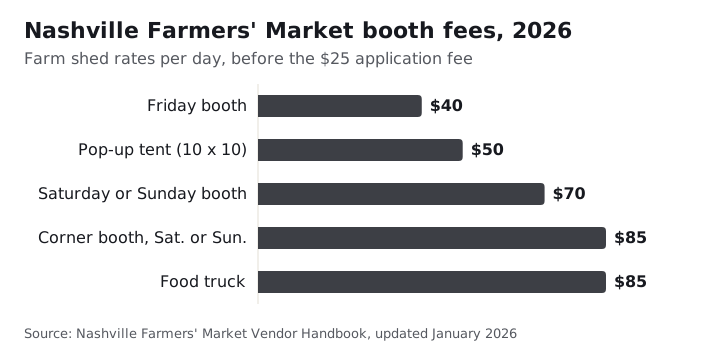
| Fee | 2026 rate |
|---|---|
| Application fee (each season) | $25 |
| Approval fee (new vendors, once) | $30 |
| Friday booth | $40 ($55 corner) |
| Saturday or Sunday booth | $70 ($85 corner) |
| Pop-up tent, 10 x 10 | $50 |
| Food truck, per day | $85 |
| Monday to Thursday vending | 10% of sales |
| Farm shed membership | $650 a month ($750 corner) |
These rates come from the market’s 2026 vendor handbook, which also lists half-price winter rates in January and February. A membership guarantees your space and storage, but it’s only offered to vendors in good standing who have finished the probation period.
Neighborhood markets around Middle Tennessee set their own applications and fees. A smaller market can be a good place to test a product before applying to a large one.
Step 5: Plan Your Booth and Your Day
A good booth is easy to read from ten feet away and fast to buy from.
- Price everything clearly. Shoppers walk past booths where they have to ask.
- Take cards and mobile payments.
- Offer samples where allowed. At the Nashville Farmers’ Market, samples must be single servings kept at safe temperatures under Metro Health guidelines.
- Bring enough stock, and track what sells out first.
- Report your sales. The Nashville market requires daily net sales reports through Marketspread.
Keep cold food cold. A cooler with ice packs and a thermometer is basic gear for anything that needs refrigeration.
Step 6: Grow Beyond Market Day
A market booth is a great way to find customers. It’s a harder way to build steady income, because sales stop when the market closes.
Tennessee’s own numbers show the shift. In the 2022 Census of Agriculture, food Tennessee farms sold straight to shoppers dropped 19.6% in value from 2017. Sales to stores and of value-added products grew (UT Institute of Agriculture).
Use the market to open other channels:
- Collect emails and phone numbers for pre-orders and holiday specials.
- Pitch nearby cafes, shops, and restaurants that see your product at the market.
- Offer local delivery for repeat customers and office orders.
- Take catering and event orders from shoppers who like your food.
For example, a baker at the Nashville Farmers’ Market might land a weekly order from a coffee shop Downtown. Holiday orders might follow from shoppers in East Nashville. Our guide on how to transport a cake covers getting fragile orders there intact.
Shelf-stable homemade foods can be delivered by you, an agent, or a carrier under the Food Freedom Act. Homemade foods that need refrigeration can’t. Those still have to be sold in person.
Frequently Asked Questions
What do I need to sell at a farmers market in Tennessee?
You’ll usually need a product that’s legal to sell, a sales tax account, liability insurance, and any health or agriculture permits your product requires. Each market also has its own application and fees.
Can I sell homemade food at a farmers market in Tennessee?
Yes. The Tennessee Food Freedom Act allows many homemade foods to be sold without a license, including some that need refrigeration when sold in person. Each product needs the required label.
Do I need a permit to cook food at a farmers market?
Usually yes. Tennessee’s Farmers Market Food Unit permit covers vendors who prepare and serve food at markets with temporary equipment. It costs $300 a year. In Nashville, check with the Metro Public Health Department.
How much does it cost to sell at the Nashville Farmers’ Market?
The application fee is $25 a season, plus a one-time $30 approval fee for new vendors. Booths cost $40 on Fridays and $70 on Saturdays or Sundays in 2026.
Do I need insurance to sell at a farmers market?
Most large markets require it. The Nashville Farmers’ Market requires at least $1 million in general liability, property damage, and product liability coverage.
Do farmers market vendors charge sales tax in Tennessee?
Yes, on taxable sales. Register for a sales and use tax account and collect tax at the state and local rate. Food is taxed at a reduced 4% state rate plus the local rate.
The Bottom Line
Selling at a farmers market in Tennessee starts with a legal product, a sales tax account, insurance, and the right permits, then a strong application. Use the market to meet customers, and build pre-orders, wholesale, and delivery from there. When those orders need to get across town, see how bakery delivery and food and beverage delivery work in Nashville, or price a delivery route.