How to Transport a Charcuterie Board Without Losing the Look or the Food Safety
How to transport a charcuterie board for a catering order or event: what to build ahead, how to wrap and pack it, how to keep it cold on the drive, and how long it can safely sit out once it arrives.
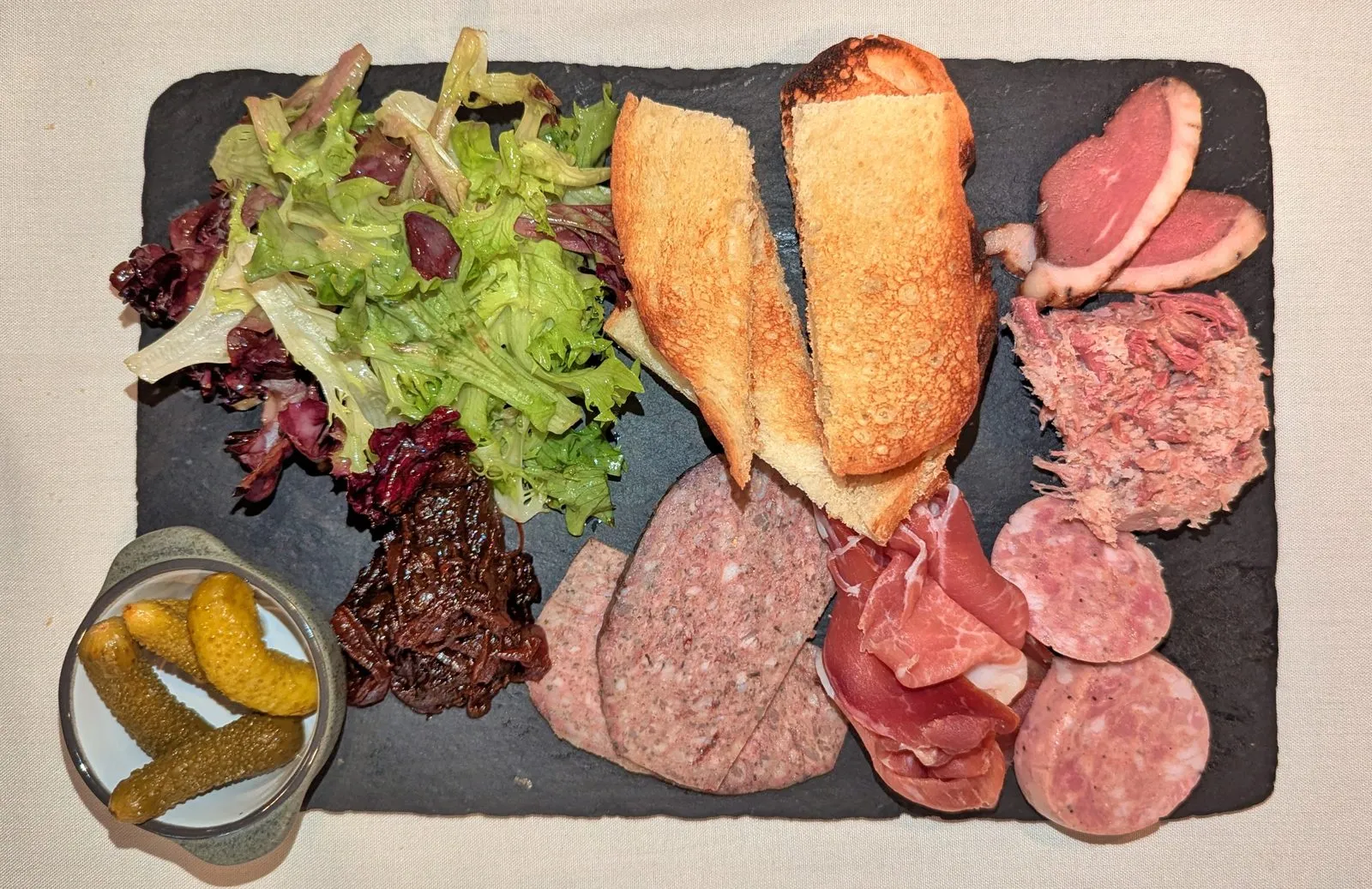
To transport a charcuterie board, keep it cold until the last minute, wrap it tightly so nothing shifts, carry it flat on the vehicle floor with a non-slip mat underneath, and add crackers and garnishes on site. For large grazing tables, pack components separately in chilled containers and assemble at the venue. Once it’s set out, a board with meat and soft cheese has a clock running, and the caterer should know how long it is.
This guide is written for caterers and grazing-board businesses delivering boards to offices, venues, and private events around Nashville.
Key takeaways
- Build boards cold and keep them cold. Meats and soft cheeses should stay at 41°F or below until service.
- Pack crackers, bread, and garnishes separately so they stay crisp and fresh.
- Carry boards flat on the floor or in the trunk, never on a seat, on a non-slip mat.
- Large grazing tables travel better as parts. Assemble on site from chilled containers.
- Know the time limit. The USDA says 2 hours at room temperature, or 1 hour above 90°F.
Build Ahead or Build On Site?
The first decision is where the board gets built. It depends on size, distance, and the setting.
| Board type | Best approach | Why |
|---|---|---|
| Small boards and boxes (2 to 10 guests) | Build fully in the kitchen | Easy to wrap, chill, and carry |
| Medium boards (10 to 30 guests) | Build in the kitchen, garnish on site | Keeps crackers crisp and herbs fresh |
| Large boards and grazing tables | Pack components, assemble on site | Too big to move without shifting |
| Outdoor or summer events | Assemble close to service time | Limits time out of refrigeration |
A grazing table is a large spread of meats, cheeses, fruit, and bread laid directly across a table, usually for 30 guests or more. It can’t travel assembled, so the job becomes packing parts well and building quickly at the venue.
How to Pack a Charcuterie Board for Transport
1. Chill Everything First
Build with cold ingredients and refrigerate the finished board before it leaves. A board that starts cold stays safe longer and holds its shape better.
The FDA Food Code, the model food safety code that state and local health rules are based on, sets 41°F as the cold-holding temperature for foods that need refrigeration (FDA). Sliced meats and soft cheeses fall in that group.
2. Lay Out for Travel
- Anchor heavy items in the center, such as cheese wedges and bowls.
- Use small cups or ramekins for olives, jams, and dips, and lid them for the drive.
- Pack tightly. Gaps let items slide. Fill them with sturdy items like cheese cubes or folded meat.
- Leave out crackers, bread, nuts, and fresh herbs. Pack them separately and add them on site.
3. Wrap It Tightly
Cover the whole board with several layers of plastic wrap, pulling it tight over the food and around the board. The wrap holds items in place as well as protecting them. For boards with tall items, use a clear dome lid or a box with enough height.
Charcuterie boxes for individual guests should have fitted lids and stack flat.
4. Box It and Keep It Cold
- Use a sturdy box or tray that fits the board, so it can’t slide inside.
- Add ice packs around the board, not on the food. Place them under the board or along the sides.
- For large orders, use insulated carriers or coolers sized for flat trays.
- Label each box with the client name, contents, and the time it left refrigeration.
How to Keep a Charcuterie Board Stable in the Car
Most damage happens in the vehicle, not the kitchen.
- Put boards on the floor or in the trunk, which are flat. Seats tilt.
- Use a non-slip mat or rubber shelf liner under each board.
- Wedge boxes with towels or other boxes so they can’t slide.
- Keep the car cool. Run the air conditioning before loading in summer.
- Drive like you’re carrying a cake. Brake early and take turns slowly. Our guide on how to transport a cake has more tips that apply to boards too.
For example, consider a 25-person board for an office lunch in Midtown. If the drive from your kitchen is 25 minutes in traffic, the board should leave the fridge with ice packs in place. It also needs to arrive early enough for you to unwrap, add crackers, and set up before guests walk in.
How Long Can a Charcuterie Board Sit Out?
This is the question to answer before every event, not after.
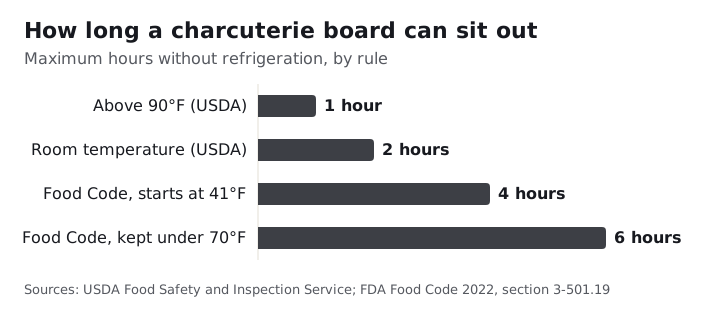
USDA guidance for perishable food: The Danger Zone is the range between 40°F and 140°F, where bacteria grow fastest. Don’t leave perishable food in it for more than 2 hours, or more than 1 hour if the temperature is above 90°F (USDA FSIS).
FDA Food Code time control: Time as a public health control is a Food Code rule that lets licensed food businesses hold food without temperature control for a set time. The FDA Food Code section 3-501.19 allows two options for cold food (FDA Food Code 2022):
| Option | Starting temperature | Limit |
|---|---|---|
| 4-hour rule | 41°F or below | Serve or throw out within 4 hours |
| 6-hour rule (cold food only) | 41°F or below, and never above 70°F | Throw out at 6 hours, or sooner if it passes 70°F |
Both options require marking the food with the time it came out of refrigeration or its discard time. Health departments also expect written procedures, prepared in advance, and once the limit is reached the food must be served or thrown out right away, as South Carolina’s guidance on the same Food Code section spells out (SC Department of Agriculture). Check with your own health department before relying on time control.
For most events, plan on the shorter limits. Tell the client when the board should be cleared, and put it in your event agreement. Our guide to catering contracts covers food safety and leftover clauses.
Ways to Extend Safe Serving Time
- Use chilled platters or ice trays under the board.
- Set out smaller boards and replenish them from a cooler, instead of one giant board.
- Keep the board out of direct sun and away from heat lamps or warm buffet items.
- Lean on shelf-stable items for long events: hard cheeses, whole cured salami, nuts, dried fruit, and crackers.
Delivering Charcuterie as a Business
If you sell boards and grazing tables, delivery is part of what the customer pays for.
- Price delivery separately or build it into your minimum order.
- Set a delivery radius you can reach while the food is still cold.
- Charge for setup time on grazing tables.
- Photograph the board on arrival as proof of how it was delivered.
Hot food takes a different setup. Our guide on how to keep food hot while transporting it covers that side of catering.
Frequently Asked Questions
How do you transport a charcuterie board without it falling apart?
Pack items tightly with heavy pieces in the center, wrap the board in several layers of plastic wrap, and carry it flat on the vehicle floor on a non-slip mat. Add crackers and garnishes on site.
How long can charcuterie sit out at an event?
The USDA says perishable food shouldn’t sit out more than 2 hours, or 1 hour above 90°F. Licensed food businesses following the FDA Food Code may use time control for up to 4 hours, or 6 hours for cold food kept under 70°F.
Can you make a charcuterie board the night before?
You can prep components the night before and refrigerate them. For best quality, assemble the board close to delivery, and add crackers and bread on site.
How do you keep a charcuterie board cold while transporting it?
Refrigerate it before leaving, pack ice packs under or around the board, use an insulated carrier, and keep the vehicle cool.
How do you transport a large grazing table?
Pack each component in chilled, labeled containers and assemble at the venue. A grazing table is too large to move assembled without shifting.
Should crackers go on the board before delivery?
No. Crackers and bread soak up moisture from meats and cheeses. Pack them separately and add them when you set up.
The Bottom Line
A charcuterie board travels well when it starts cold, stays tight, and rides flat. Add crackers and garnishes on site, and know how long it can sit out once it’s served. If you need boards delivered across town on schedule, from Green Hills to Midtown, see how catering delivery in Nashville works, or price a delivery route.